


How to Select Stair Nosing That Is Both Safe and Stylish

Updated: Mar 18

Welcome back to another edition of Carpenter’s Corner! Where we explain the industry terms and phrases so you can navigate convos with your contractors like a pro. Today on the Pinto Carpentry blog, we’ll be discussing different types of stair nosing. Let’s dive in and “get our learn on!”
Stair nosing might sound like a silly phrase, but we promise it’s a legitimate term, and an important one! Stair nosing is the protruding edge on the front of your stair; its main purpose is improving the safety of the staircase, providing a little extra space for people to place their foot on the stair. Protruding stair nosing can also make it easier to see the stair itself when walking, and reduces the instance of misjudging the width, helping those with poor eyesight or in stairwells with poor lighting. IIn general, it makes walking up and down the stairs more comfortable and reduces incidents of accidents from slipping and falling.

Stair nosing also protects the stair treads from damage and general wear and tear, and it takes the brunt of the physical force of walking; less damage to the overall stairs means less necessity for repairs down the line.

So, which type of nosing is right for your household needs? How do you select a stair nosing that is both safe and stylish? Let’s get into it!
Flush Nose or No-Overhang - This style is becoming increasingly popular with homeowners who want a more seamless look with modern design. As stated in its name, this nosing sits flush with the riser, since it forms a 90 degree angle with zero overhanging protrusion over the vertical face of the riser. It gives a very sleek appearance when the stairs receive a universal stain color or have carpenting.
Pencil Round - This nosing remains the most popular option as it suits all lifestyles and homes. This style of nosing takes its name from the appearance akin to a #2 pencil, with a flat face featuring rounded corners and no sharp edges, it appears as if a pencil has been laid at the edge of the tread. This is a fantastic option for homeowners who change their style frequently, as it works seamlessly with all aesthetics. For households with children, elderly residents, or pets, this is the best choice as the edges are not sharp and don’t protrude excessively.
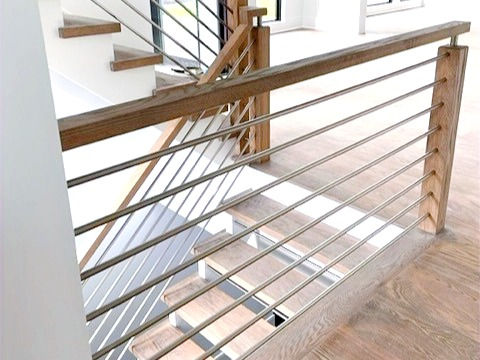
Square Edge Nosing - This is a very popular option for both residential and commercial stairs with contemporary and modern architecture. It provides a very clean and modern look featuring a square edge with an underside return that forms a 90 degree angle with the riser. It does have a slightly rounded edge to prevent dents, scratches, and other visual damages. When used in conjunction with modern balusters and railings, it creates a very dramatic, sharp look with visible definition to each stair and a very chic aesthtic overall.
Half Round Nosing - This nosing employs a semi-circular, curved and rounded edge which protrudes slightly from the front of the stair tread. This gives the stair slightly more surface area, providing your foot with additional grip and support, making it a safer option. This is also sometimes referred to as “bull-nose” style. You’ll see this most often on the landing or bottom stair of a staircase. While less popular in new builds, it is generally found most frequently in older and traditional style homes.
Full Round - This nosing features a fully circular, completely smooth semicircle with a profile that protrudes from the front of the stair tread. It is a beautiful, elegant style, but as it protrudes more than other styles, it isn’t as “slip safe” as other choices. This is most often employed for a staircase llanding, though you could also opt for this on larger numbers of stairs to create a softer edged look.

When selecting a stair nosing, it’s important to consider safety first and design second. Think about the specific needs of your household or business. You want to make sure that all inhabitants can see a clear edge to the stairs. Ensure high traffic staircases have a non-slip surface which increases traction and minimizes falls. After safety, you can consider your design style choices and match to your decor choice, or opt for something flexible and timeless that works with multiple styles.
Learn more about how stairs are designed and built from This Old House YouTube Channel:
Are you looking to repair, replace, or design the perfect staircase for your home? Pinto Carpentry is on the case! (Pardon our pun. It’s intentional!) Pinto Carpentry specializes in serving most areas of New Jersey for bespoke stair builds and custom indoor handrail installations.
With more than two decades of industry experiences, our masterful team of carpenters will create a custom built staircase to suit your household or business needs. Give us a call or DM us on social media to inquire about a free consultation and receive a customized estimate tailored to your budget and style requests. Not sure which stair nosing or stair material fits your budget? No problem! Our expert staff can help guide you to different price points in material for the most cost effective option without sacrificing style or design.
Call Pinto Carpentry at 908-922-1778 or reach out to us on Facebook and Instagram via @PintoCarpentryNJ . When calling for your appointment request, please make sure to have pictures of your current stairs and rails as well as any inspiration you may have gathered, so we can properly tailor your estimate to your project.
We do not service outdoor handrails or staircases; we are an indoor handrail and indoor stair build carpentry company only.


Comments