


Become the Ultimate Expert in Railing and Stair Materials

Are you wondering what materials to select for your custom indoor handrail? Struggling to select a style of indoor handrail or baluster material that will match your home’s interior design? Not sure what type of wood or metal will work best for indoor handrail? Unsure of what wood will work best for your budget and design needs for your custom stair build? We’ve got you covered: let the experts here at Pinto Carpentry help shine a light on the subject!
Today’s blog is all about exploring different materials used in the process of crafting custom indoor handrails and bespoke stair builds. By the time you’re done with today’s blog, you’ll become the ultimate expert in wooden stair railings and wooden stair materials and then some!
Let’s take a look at the most common natural wood materials available on the market for indoor handrails!
Pine is much cheaper than the usual hardwoods and is perfect for homes seeking a rustic, natural appearance. While poplar and oak offer much stronger durability, it is a practical option for the most affordable solution on stairs and rails. It’s not recommended for extremely high-traffic areas unless you’ve selected a very high-quality, durable clear coat and finish. It’s least favored for stairs due to its ability to nick and dent and show wear over time, but a great choice for low-traffic areas if you need to save a few dollars.
Poplar is a great cost-effective option for railings and stairs, and lends itself quite easily to paintability. It is one of the softest options in hardwoods, making it easy to cut and shape for detail work. It’s also much more budget-friendly than oak and maple, allowing you to create a high-end look with staining and painting without breaking the bank. A popular choice is staining poplar for a walnut, cherry or mahogany finish to add luxury for pennies on the dollar.
Red Oak is the most popular choice for indoor handrails and indoor stair builds. It’s a top contender for most durable, most accessible, and readily available material. It’s a dense wood that stands up to daily wear and tear. It’s also the most abundant hardwood in the US, making it a great cost-effective option. The beautiful reddish tinged natural hue gives it a very warm, high-quality look that elevates the home with ease. Carpenters and woodworkers also love to work with this wood as it’s easy to mill and install, and great for finishing with stain for a versatile ability to match any decor style.
White Oak is similar in popularity to red oak in handrail material, thanks to its accessibility, durability, and versatility. It has a lighter, more neutral tone than the aforementioned red oak. White oak readily takes stains and clear coat, making it a wonderful choice for those looking to customize and refinish to match any decor style. It also has superior water resistance and can work well for both outdoor and indoor use and especially in humid environments. White oak is perfect for high-end looks with its lovely grain, and top notch performance on a mid-price point budget. This is a great choice for stairs and railings in high-traffic areas.

Let’s explore some more luxurious choices of handrail and stair materials!
Maple is a little more expensive than oak, but does offer enhanced durability, high-density material with a tighter, less pronounced grain; the result is a subtle, clean and modern look that can be sanded into a truly smooth and sleek finish. Maple is considered a more premium option for handrail and stair material, but of the more luxury options it is the most accessible.
Walnut tips into the luxury, high-end options for handrail and stair materials, but would make a perfect choice for those looking to create a real focal point in the home. The natural medium brown hue and elegant graining makes it a real stand-out choice. Walnut stands up incredibly well to every day use and wear. Its denseness makes it an excellent contender for stairs and rails, as they’ll withstand the test of time with far less warping and bending over time with high usage. Most people prefer to do a satin clear finish on walnut to allow its natural beauty to shine through. This material also works very well with mid-century modern, industrial modern, and modern contemporary styles. With time, walnut material will build up its own natural patina and add even more richness to the environment.
Cherry wood material is prized for its gorgeous rich, natural color and subtle graining, and an outstanding auburn patina that developes over time. It’s slightly softer than oak, making it a wonderful choice for customizing with intricate detailing and woodworking, yet remaining strong enough to use for stairs and rails. It should be noted that this is a better option for lower-traffic areas of the home as it does dent and nick more easily than previously listed materials. An alternative option with a similar aesthetic would be Brazilian Cherry, which is extremely durable for stairs and rails, and finishes quite well with a similar warm glow of Cherry without the softness.
Mahogany is an extremely premium entry into railing and stair material, but it’s absolutely one of the most durable, highest value adding, and lowest maintenance options. There is no mistaking the richness asnd luxury of mahogany in a space, as its deep, reddish brown tone is a real showstopper. It’s both extremely durable and workable, making it an excellent option for both indoor and outdoor application, but when used indoors it adds a true feeling of luxury and drama. It’s low maintenance in upkeep, but adds an astounding amount of long-term value to your home. It’s a perfect choice for visually striking handrails and stairs, especially if your home has a focal point like a circular or bifurcated stair in a central point. This is the one you want for true modern luxury that will outlast your mortgage and then some, and will add a timeless elegance to literally every decor style.

Looking for a hybrid look? Here are some non-wood options for railing material.
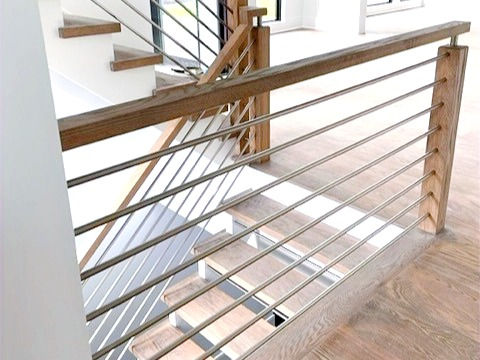
In recent years here at Pinto Carpentry, some of our most popular requests have been combining natural wood materials with a modern, sleek metal material for contrast. The result is a clean and updated look that withstands the test of time but is flexible enough for multiple interior design styles. If you’re someone who loves to follow modern trends, this is a great option for you.
Stainless steel is a popular option for handrails and balusters thanks to its durability and strength and corrosion resistance. This can be used in cable or bars and balusters.
Aluminum is budget friendly and lightweight, offering the same corrosion resistance as steel but at a lesser price point.
Wrought iron is an excellent choice for ornate, classical styling and historic homes.
Brass and Bronze finish material is high-end and requires an immense amount of maintenance to upkeep its luxurious aesthetics.
Glass panels are popular in modern and modern-industrial interior styles, but require equal maintenance to the high polish brass or bronze to avoid unsightly smudges and fingerprints.**
**Please note that we do not work with glass panels here as part of our repertoire at Pinto Carpentry, but we are mentioning on the list as it is a non-traditional, non-wood railing material.

Are you looking for a railing and stair carpenter in New Jersey? Do you have a residential or commercial build that needs custom indoor handrail or custom indoor staircases? Are you seeking to repair or replace stair treads or indoor handrail? Pinto Carpentry is here to help! With more than two decades of industry experience in carpentry contracting, we can work with a variety of materials and style aesthetics. If you’ve got a specific interior design style you’d like us to match, just ask! Some of our most popular requests as of late have been modern indoor handrails, custom circular stairs, cantilevered modern stair builds, and Scandinavian style handrails. While not open to the public, our woodshop is located in Union County in Plainfield, NJ. You can restassured our custom stairs and handrails will be expertly crafted and assembled with top quality materials and passionate care at our professional shop or on site at your home or business. Our carpenters and handrail installers are ready to work on your project – big or small jobs, we do it all! Pinto Carpentry serves most areas of Northern New Jersey, Central New Jersey, and some parts of Southern New Jersey.


Comments