


Learn About Indoor Handrail Styles and Indoor Handrail Components

Updated: Feb 24

We understand that building and renovating homes is not a part of most of our clients’ daily lives, so we know that undertaking either of those tasks can be a little overwhelming at times! Today’s blog is dedicated to helping educate our clients on some of the terminology of the industry so you can be more informed and prepared to discuss things with your contractor. We’ll be helping you learn the ins-and-outs of indoor handrail installation so that you can navigate conversations with ease.
Here are some important words or terms you may hear during your consultation appointment for an estimate, or during the process of selecting materials followed by the actual installation! Let’s explore indoor handrail styles and indoor handrail components.
Names of Indoor Handrail Styles and Aesthetics.
Contemporary/Modern Design
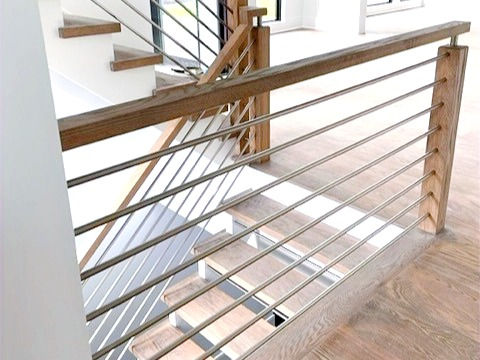
This type of railing features sleek lines and often utilizes black metal, chrome finish, brushed stainless steel and sometimes even acrylic or glass components. It may feature cable or horizontal bars to create clean lines and sleek, minimalistic geometric designs. This is one of our most popular styles of railing installation at Pinto Carpentry.
Traditional/Classic Design
This railing option features classic designs inspired by early American builds and colonial designs. They often feature curved, polished wood or wrought iron features. A more modern transitional look may include wrought iron or black metal balusters with wood railings for an updated, fresh feel.
Industrial Design
This design utilizes components that are heavy with black iron pipes or brushed steel for a rugged, minimalist design that recalls urban elements. The more trendy options in industrial design include matte or satin black metal finishes, copper elements, steel, or aluminum to emphasize the balance of utility and aesthetics.
Farmhouse Design
This charming design brings in some rustic, homestyle elements like rich, warm wood with clean lines. The look balances modern black metal or white primed painted balusters to blend modern living with classic country whimsy. This vibe utilizes a lot of chunky, squared cap newels and thinner spindle balusters for a functional but charming look.
Nautical Design
This maritime inspired look combines white washed elements with warm, polished wood to evoke the feeling of ship decks, boat docks, and coastal charm. Some design features mimic ship railings with white primed wooden balusters and round, polished handrails. For a more literal approach, some homeowners opt for steel cable, horizontal bars, or even brass and rope details.

Key components of Indoor Handrails:
Baluster/spindle - These are vertical pieces which line the staircase and connect the baserail to the handrail of a balustrade. Balusters usually rest on a footing such as a step or floor, while spindles are supported by horizontal rail at the bottom, attached to posts. Many people use the terms interchangeably, as spindle is the term most are more familiar with. These may be made of wood or metal, and come in a range of styles from traditional to carved geometric or ornate decorative styles.
Balustrading - This portion of the railing system that supports horizontal rails, and presents people, small kids, and even pets from falling off the edge, and also sometimes the overarching term used to refer to the completed assembly of a handrail system (rails, newel posts, balusters, etc). In areas of a home or building where someone will be able to access stairs or a balcony, the balustrade is required.
Bracket - a piece of metal used to attach the railing to a wall, most generally installed every 3 to 4 feet depending on specific building codes; the width of the handrail used will determine which size of bracket is required
Baserail - This is sometimes also known as “Bottom track” and it runs parallel along your staircase from the top to the bottom and along the landing if applicable; its purpose is to support or hold the balustrade, securing wooden or metal spindles/balusters, or decorative panels in place.
Continuous handrail - This means a single handrail must run from the top riser to bottom riser of your staircase, and also that a person should be able to maintain grasp of the handrail all the way up or down easily.
Fillet - This is a small piece of wood from the same species as the handrail, which gets inserted into the underside of a grooved handrail. Its purpose is to conceal the top of the balusters or spindles. It helps mask the appearance of the groove for a more seamless look. It will fill the plow between balusters if you’re using plowed handrail and shoerail.
Handrail - A long narrow bar of wood or metal which is used to provide hand grip for safety or support; it may be wall-mounted or it may be integrated and extend from the side of stair rail, or sit atop posts and balusters on open sides of a staircase. Handrail can be crafted from a wide variety of materials
Horizontal Rail Supports - These supports are attached to rail posts and used to hold the balusters in place. This can help attach to walls, staircases, and ramps.
Newel - This functions as an anchor pillar for a railing and staircase. It is the post at the head or foot of a staircase which supports the handrail, also sometimes referred to as a central pole or support column. Additionally, it may also refer to the upright post which supports and/or terminates the handrail of a stair banister.
S-Turn - This is a turn in the wood to extend the handrail so it turns around a wall or some other obstruction so that it may remain a continuous handrail
Shoerail - This is the plowed bottom rail of your balustrade system in which the bottom of your wood balusters will be mounted to shoe plates, hardwood floors, and stairway knee-walls. The simplest explanation is that it is a horizontal molding where posts and balusters may be attached.
Top rail - This is the uppermost component of the railing which runs between posts, also sometimes known as a cap rail it will connect the infill (balusters, pickets, spindles, etc)

At Pinto Carpentry, we specialize in crafting fine custom indoor handrails to perfectly match your interior design aesthetic. Don’t see what you like from our usual suppliers? Let us know and we can help create custom panels or handrails to suit your fancy.
Our expert carpenters have more than two decades of experience under their belts in a wide range of carpentry fields, ensuring that we have top tier expertise to get the job done right the first time. We only source high quality, durable materials from reputable suppliers to make sure you’re only getting the best of the best for your home and business needs.
We’re available to work on new builds, railing and stair repair and replacement, and both residential and commercial projects. Give us a call or message us online to request a specialized consultation and customized estimate. Pinto Carpentry serves most areas of New Jersey, just ask!


Comments