


The Ins-and-Outs of Carpentry Business: Apprenticeship to Entrepreneurship

You may have seen Pinto Carpentry posts detailing our experience for more than two decades in carpentry and contractor work, but we didn’t get there overnight! We first started out with apprenticeships and assistant work, before eventually beginning to take small freelance jobs on our own, and later opening our own official business. If you’re just starting out in your carpentry journey, and wondering what the next steps are, we’re here to help! On today’s blog, we’re going to share a few of the things to consider if you wish to branch out from apprenticeship to entrepreneurship in carpentry and contractor fields.

First up, let’s talk about apprenticeships: what you should expect when applying, how to find one, and what are the basic requirements. Generally speaking, for most apprenticeships you’ll want to have a GED or High School Diploma or equivalent working knowledge in the field (through workshops, hobby work, etc) and be at least 18 years old. You should have strong math skills and reading comprehension, especially if you’re going to be looking at blueprints, plans, and measurements. A valid drivers license so you can get to and from the job site and the shop is crucia. This job also requires you to be in fairly good shap to do general physical fitness tasks, as the job often involves a lot of heavy lifting, moving of materials and objects, climbing, standing, and bedding. And of course, it never hurts to have taken some vocational school or basic carpentry skills classes at a local community college.
Next, make a list of the types of work you wish to learn, and look for local companies and contractor unions in your area that service that type of field work. Reach out and inquire if they’re open to an apprenticeship and tell them a little bit about yourself. During the apprenticeship process, you should expect to go through a formal interview process with a resume, background check, drug screening, and series of interviews with various staff members or crew.
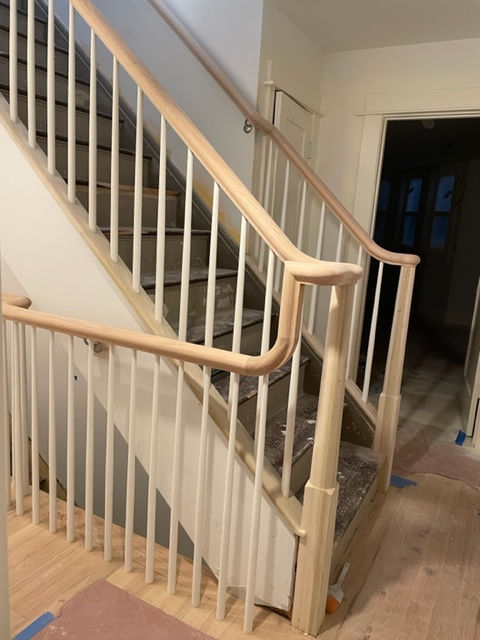
Second, let’s explore what to expect from your apprenticeship: what jobs will you likely be doing, what skills will you learn, how many hours/years of training to complete, etc. In general, most apprenticeships will take anywhere from 3 to 5 years to complete your education.
The first two years are generally focused on learning different tricks and techniques, cutting/preparing/installing different materials and products, learning to complete simple tasks and prep work, and hone general skills until they’re perfectly precise.
Most apprenticeships also involve some formal education through trade school courses and workshops, generally anywhere from 6 to 12 months of work. You’ll then move from practicing, prep work, and classes to on-the-job training, where you’ll shadow the professionals on the job sites and start working live with the crew on a regular basis. Part of the on-site experience also includes learning how to process bids for construction jobs, working with other contractors, working alongside architects, dealing with clients directly, applying for and filing permits with local planning boards, and other administrative tasks. When possible, it can also be a good idea to take photos and videos of the work you’ve completed; visual proof can help show an improvement in your skills as well as building a portfolio of skills and work to show future employers or clients later on.
Overall, you can expect about half a decade or more before you become a “journeyman” and are ready to start on your own path. Through experience, you’ll be able to find the right field and niche of carpentry that is right for you, which can include rough carpenter, joister, roofer, framer, finish and trim carpentry, cabinetry, set and production carpentry, and more. Of course, please remember these are just averages and estimates, as some speciality skills and areas of carpentry can take much longer, some as much as a decade, before you can be promoted to foreman/lead on the job site.
While you’re on the apprenticeship wagon, you’ll also have the opportunity to build a network of colleagues. From coworkers to job site managers to builders and architects, you’ll be meeting and greeting all types of important people in the industry. Taking the time to introduce yourself and putting your best foot forward will help people remember your name later down the line! These mutual connections can lead to great recommendations as you begin your own business in the future.

Before you embark on the journey of creating your own carpentry company, here are some other key skills you’ll need to learn after apprenticing. If you’re going to run your own business, you need to consider a few different things. Each type of carpentry and its subsets require a specific skill and niche knowledge, so you’ll want to make sure your apprenticeship will set you up for the right end result field.Will you be working in Residential carpentry, commercial carpentry, or industrial carpentry? Residential carpentry focuses on building and remodeling houses, townhouses, condos, and apartments. Commercial carpentry focuses on building offices, retail stores, malls, restaurants, and other business structures. Residential and Commercial carpentry skills are the most common, and many companies, like our crew here at Pinto Carpentry, can complete both types of work. Industrial carpentry focuses on building framework for things like tunnels, dams, bridges, and other vital infrastructure; this is a highly specialized field of carpentry, and not a very common pursuit. (But for the purposes of education we’re including it here!)
You’ll also want to consider taking a few business courses online or at a local community college. Having a good business plan, budget plan, and an overall scope of how to run and manage a business is vital to a successful carpentry company. Not everyone has the capital to get a staff behind them right away, so you may need to be a “jack or jill of all trades” in the beginning days. Making sure to keep good records and a clean filing system will help you keep track of estimates, install dates on the calendar, and general inventory of supplies. You will also need to know how to price your work enough to cover everything from labor to materials to insurance.
Once you’ve got a handle on that, you can begin to take on small freelance work on the side while working for a larger company to make ends meet. Slow and steady is the key, here, not taking on more projects than you can physically handle and rushing through the process. Good things take time, and it’s always worth the wait!

To find your first carpentry clients in today’s modern world, you’ll need a memorable company name and recogniziable logo, plus a solid website and social media presence. We understand that adding ‘business manager’ ‘social media manager’ ‘web designer’ and ‘content creator’ to your list along with those hard-earned carpentry skills is not ideal, but when you’re just starting out it doesn’t hurt to try! If you’re not media or tech savvy, this is one of the places we highly recommend outsourcing the work. Find a local social media management company or manager to help you get your accounts established, as well as a web designer to build you a basic website with your portfolio of images (this is where those earlier photographs and videos from your apprenticeship can really come in handy!) Bonus points if your website and social media also include reviews and references from past freelance clients and/or colleagues. Once all of those items are set up and ready to go, you can start advertising in your local community through Facebook Marketplace, Instagram Ads, Pinterest and Houzz sites, online and local directories, partnerships with big box store contractor programs, and more. If you have the time and energy, you can also sign up for local trade shows that put you front and center directly with clients looking to renovate or build!

And last but not least we cannot stress enough the importance of becoming a household name through being personally involved in your communities – you want to become a recognizable face in the area as someone who is kind, welcoming, and a constructive member of the local neighborhood, as you’ll find later on that word of mouth sales and referrals are a bulk of any contractor’s clientele! Shop local and eat local whenever you can. Get to know local business owners and attend community meetings. Volunteer at local organizations and community events. Get your face and name out there as a person who is an active part of the community in as many ways as possible.
Of course, this is not an exhaustive list of the only ways to leverage your apprenticeship and carpentry skills, but we hope that it gives you a little head start on what to expect. On behalf of the crew at Pinto Carpentry, we wish you well on your journey!
With more than two decades of experience, Pinto Carpentry specializes in indoor handrail installations and bespoke stair builds. Our crew is ready to help you with your residential or commercial builds and serves most regions of New Jersey for indoor carpentry projects. Whether you’re a homeowner, businessowner, or general contractor, we’d love to work with you! Give us a call at 908-922-1778 for all your indoor railing and stair building needs. Our knowledgable office staff will get you set up with a consultation to create a customized estimate based on your desired project materials and aesthetics. We’re now booking new client work for January and Februray 2026!



Comments