


Improve Stair Safety in New Jersey Homes

One of the top things that we are asked by clients is how to improve the safety of their stairs for children, toddlers, the elderly, and even pets. We thought it might be helpful to have a one-stop shop to reference with specific tips and tricks to improve your staircase safety at home. We’re breaking down the general safety tips, as well as by demographic so you can tailor your staircase and railing safety to your particulars.
How to Improve Stair Safety for Your Family: Toddlers and Children, Elderly Family, and Household Pets

Upgrade or replace stair treads and risers as soon as you notice they’re damaged.
We recently covered what signs to look for to know if your stairs need repair or replacement, but we’ll include some of those points on our list for safety sake today! If you notice any cracks or significant wear on your treads or risers, it’s best to replace them ASAP. If any of the stairs are significantly creaky or whiny when you walk, you’ll want to have them looked at by the pros to see if it can be partially replaced or if you have some structural issues.
If you’ve purchased a home from a “DIYer” we also recommend consulting a local stair contractor to ensure that they’ve been installed properly from the get-go; sometimes this feature gets overlooked on inspection if not required by the town, or not disclosed during sale. The contractor can check the safety code of the staircase or tread/riser replacements for you and let you know if they’re not up to code. (For reference, the proper stair tread depth depends on the type of stairs as well as the building codes which apply, so you’ll want to have your contractor evaluate properly. Most residential stair treasd are at least 10 inches with nosing and 11 inches without nosing, and tread depth generally should vary less than ⅜” with 10-11” being most common. In short, stairs should be comfortable with enough space for the average adult foot to step comfortably.)It’s also important to note that in the case of some older homes, certain stairs may not be able to be modified or replaced due to space and headroom constraints, and they may be “grandfthered in” to the local code compliance laws.
Select the right stair nosing for your household.

Stair nosing is the slight protrusion at the edge of a tread which adds a vital layer of safety to your staircase. It makes the stairs more visible, protects them from wear, and decreases the need for frequent repair. It also helps make the stair itself more visible in all types of lighting. It’s a notable feature for preventing falls and accidents, by allowing the foot more area to grip the step more securely. For most stair projects, the nosing will extend from ¾” to 1 ¼” over the end of the tread. The nosing will sit flush with the tread, and if there is a different material added to the end of the tread material, it should not have any raised edge to prevent slips and falls.
Types of stair nosing include Flush Nose (No Overhang), Pencil Round, Square Edge, Half Round or Bullnose, and Full Round. You can check out our previous blogs about stair nosing to get a more in depth look at what each one does! However for the purposes of stair safety, we will select just a few key features to highlight.
Older and more traditional homes will generally have a Half Round or Bull-Nose style; otherwise; it is also the most commonly used stair nosing. Square edge nosing is rising in popularity in modern builds, as it provides a quite clean, modern look with an underside return of 90º with the riser; the edge is ever so slightly rounded to prevent dents and damage. Pencil round is the most flexible across all lifestyles and ages of resident, and a positive choice for pet-friendly housing as well; it takes its name from a #2 pencil with a flat face and slightly rounded corners leaving no sharp edges.
Professional Railing Installation Improves Safety!
Upgrade your indoor handrails to proper code.

Many older homes have damaged, loose, or outdated railings that are no longer safe and need replacing. Likewise, some towns and counties do not have as thorough of a home inspection, meaning the new homeowner might not realize that a DIY-renovater might have removed railings they shouldn’t have or improperly installed the new replacements, or a homeowner may have removed a railing and reinstalled it in the same spot leading to instability, or they may simply be installed at the incorrect height.
Pinto Carpentry regularly repairs, installs, and upgrades local New Jersey homeowner’s indoor railings on a regular basis, and you would not believe the things we’ve seen! Current code in NJ at the time of publication states that all stairways that are 44 inches or more in width should have continuous handrails on both sides, and stairways less than 44 inches wide may have a handrail on one side only. Safety codes can and will vary from state to state or town to town; check with local guidelines and building codes before starting any project.
Consider adding a custom stair gate, which can prevent falls and accidents.
For homes with elderly residents, children under the age of 3 or 4, and pets, this is another wonderful way to improve your stair safety. Installing a safety gate at the top or bottom of the stairs generally prevents children and mobile babies from accidentally crawling or walking off ledges and helps with preventing falls. This can also help prevent the elderly from slipping and falling or from tripping due to lack of use of mobility aids.
For pets, this can prevent access from certain areas of the house where they may be likely to damage or destroy items, or get into something potentially dangerous to eat, lick, or sniff. Ensure that the safety gates have a mechanism that cannot be easily opened by your pets, and that the height clearance is tall enough to prevent the ability to jump over it. Make sure your pet’s heads and paws are not able to fit through, but if you have a small pet such as a toy breed dog, you can consider having them wear an item like a “picket protector” or puppy bumper to their safety gear. Adding a thick low-pile throw rug at the landings or bottom of stairs can help them ascend and descend safely, likewise for an indoor-outdoor low pile carpet; removable carpet tape is a wonderful way to secure stair pads and rugs to wood, damage free.

While commercial gates are available for the average consumer to purchase, generally made of metal or plastic, it’s important to remember they’re not one-size fits-all! Additionally, they may not always be properly anchored to the wall; to avoid any additional issues of gates fallin down, be sure to adhere strictly to manufacturers installation guidelines! That being said, we always recommend going the extra mile for a custom gate for a little extra oomph in protection. Opting for customized gates may cost a little more in the overall budget, but it ensures peace of mind.
Custom gates are a little bit pricey, but in our opinion they are worth every penny! You’ll get something that’s perfectly fit to your stairs, is safely installed by a professional, is strongly anchored into studs, and is made of high-quality, durable materials that will wisthand a lot of wear and tear. Gates are always a worthwhile investment all around, no matter if you choose custom or budget-friendly.
Safe Stair Design also includes improving traction, visibility, and accessibility!
Take advantage of things like runners, anti-slip grip tape, and carpeting on stairs to add a little bit of style and a whole lot of safety in one go.
Adding anti-slip tape strips or grips to the stairs can help immensely for household members of all ages. Encourage children to be mindful of proper stairwell safety; this includes not playing on or around the stairs, no running down stairs, wearing proper footwear with reasonable grip and friction on the bottom, keeping one hand on the railing at all times, and focusing on descending safely without skipping any stairs. For households with young children, toddlers, and pets, you may consider adding carpeting or a runner going down the center of the stairs for improved grip and stability when walking. Removing the runners and carpeting and replacing it with anti-slip grip tape and anti-slip stair nosing will vastly improve safety for elderly household members; carpets and runners may cause slipping or tripping for those with an unstable gait.
How do I make ultra modern railings and open, airy stair designs safer for my family?

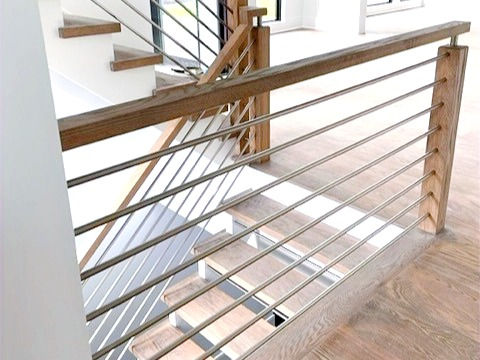
At Pinto Carpentry, we pride ourselves on setting the standard in safe stair design! We will happily advise you on different ways you can improve safety without sacrificing style. If your home has any open risers, we highly recommend installing a safety bar across the center which significantly reduces chances of dangerous injury or death of pets, children, or the elderly with feet or paws slipping through the open-air gap. Avoiding the placement of glass panels, cable railing, or horizontal bars on your handrail designs is also a good idea for handrail safety.
Of course, kids will be kids and pets will be pets, so never leave either one unsupervised on stairs! Assume that they will try something at some point, and it is better to be safe than sorry to prepare ahead. We understand not wanting to compromise on your style, but there are certainly much safer options than others! If you’re concerned about children placing body parts through the railing, your railing technician can help advise you on proper baluster placement and the safest size and shape options that may decrease this incidence.
For homes with elderly residents, we still recommend the same amendments but also that you consider adding a ramp for mobility aids, or a stair-lift with a chair for accessibility. Ensuring your family member can access anything they need on the same floor as their pesonal bedroom, such as a bathroom, a kitchenette, etc. for ease of use and accessibility can also reduce risks of falls on any type of stair or railing design. It’s also a great idea to have a medical professional demonstrate proper use of any new mobility aids on stairs and how to use handrails with the mobility aid in tow.
An experienced contractor, such as Pinto Carpentry, should be able to advise you on best practices, affordable options, and help you to bring your stairs and rails up to date within current safety standards while still ensuring they’re stylish and chic!
Consider upgrading the lighting situation in your stairwell.

Any chance you have to increase the visibility on your stairwell, go for it! For residential staircases, a warm white light between 2700K to 3000K is recommended; it’s easy on the eyes and provides clear visibility. A licensed electrician can advise you on the proper lighting source location and levels if you’re unsure of placements or installation.
Having an electrician install professional grade LED lighting strips along the stair risers, and LED rope light on the skirting or moldings is an excellent option for all household members safety. Some options also exist for installing light strips into the edge of the treads and nosing that offer additional stylized aesthetics. Bright, clear overhead lights such as recessed lighting combined with a large pendant light would work well for high ceilings to give different levels of lighting. It’s also good to make sure there’s a light switch at both the top and bottom of the stairwell for accessibility.
If you’re looking for a budget friendly option to add lighting, battery operated or rechargeable lighting and no-damage stick-on lamps are a renter friendly option. Additionally, plug-in puck lighting and motion sensor lights consume far less electricity since they are only on if triggered or pushed manually; many of these options also have an auto-on feature at dusk for safety.
Keep your stairs and railings clear at all times! Yes, even during the holidays.
The most simple and straightforward tip to improving the safety of your stairs is simply to keep them clear of clutter and mess, and avoid using them as a backdrop for decor. While it may be tempting to add Pinterest-worthy decor items between the balusters, utilize the stairs for additional home storage with baskets or bins, or even just to store items there to take on your way up to the next floor, it’s best to resist. Making sure that the landings and treads are clear for maximum safety is paramount. Avoid wrapping things around the handrail that can impede safe and efficient grip. Decorative items and/or storage bins are not just a tripping hazard but may lead to increased fall risk for pets or children who try to play with them, and cause harm to elderly family members who may have poor vision or balance.
Okay, great! Now how do I find a New Jersey based railing installer near me? How do I find a stair builder in New Jersey that prioritizes all of these safety features?

If you need to increase your home’s safety with a new set of indoor handrails or custom built stairs, Pinto Carpentry is here to help. With more than two decades of experience, we’ve built a team of experts and master carpenters who are ready to get the job done right with quality craftsmanship and design that stands the test of time. We’ll ensure that your stairs and rails are built and installed to code and increase your safety for children, pets, and the elderly.
Need something custom to fit a specific space? No problem! We tailor all of our work to our customers’ precise needs. We can work with straight stairs, curved stairs, floating tread stairs, wooden indoor handrails, metal and wood handrails, modern railings, craftsman style railings, and much more! We are also available for stair tread replacement and repairs. Just check out our full portfolio or take a look at our Case Studies page for examples of our past work. We’re here to answer any of your questions and guide you through your options.
Pinto Carpentry serves most areas of New Jersey for custom wood stairs and custom indoor handrail installation. Give our office a call at 908-922-1778 and our knowledgable staff will get you set up with a free consultation for a personalized estimate!


Comments